Ever wondered what really drives the engine of global commerce? It’s not retail stores or flashy ads—it’s B2B sales. Understanding the b2b sales meaning isn’t just for sales reps; it’s crucial for anyone in business today.
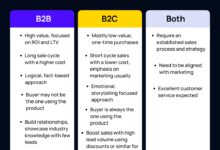
What Is the True B2B Sales Meaning?

The term b2b sales meaning refers to the process where one business sells products or services to another business, rather than to individual consumers. Unlike B2C (business-to-consumer) transactions, B2B sales are typically more complex, involve higher transaction values, and require longer sales cycles.
Defining B2B Sales in Modern Business
B2B sales, or business-to-business sales, occur when companies provide goods or services to other organizations. This could range from software providers selling CRM systems to enterprises, to manufacturers supplying raw materials to production firms.
- Sales are often relationship-driven rather than impulse-based.
- Decision-making involves multiple stakeholders.
- Purchase cycles are longer and more strategic.
According to Investopedia, B2B transactions make up a significant portion of global economic activity, often exceeding B2C in volume and value.
How B2B Differs from B2C Sales
While both models involve selling, the b2b sales meaning diverges sharply from B2C in several key areas. B2C focuses on emotional appeal and quick decisions, whereas B2B emphasizes logic, ROI, and long-term value.
- B2B buyers seek efficiency, scalability, and integration.
- Pricing is often customized and negotiated.
- Customer support and service level agreements (SLAs) are critical.
“B2B sales isn’t about selling a product; it’s about solving a business problem.” — Marc Miller, Sales Strategist
Core Components of B2B Sales Meaning
To fully grasp the b2b sales meaning, we must break down its core components. These elements define how B2B sales operate and why they’re structured the way they are.
Target Audience and Buyer Personas
In B2B sales, identifying the right audience is paramount. Unlike B2C, where demographics might suffice, B2B requires detailed buyer personas that include job roles, pain points, decision-making authority, and organizational goals.
- Common personas include CTOs, procurement managers, and operations directors.
- Tools like LinkedIn and ZoomInfo help refine targeting.
- Personas guide content, messaging, and outreach strategies.
For example, a SaaS company selling project management tools would tailor its pitch differently for a team lead versus a CFO, focusing on productivity gains versus cost savings.
The Sales Funnel in B2B Context
The B2B sales funnel is longer and more nuanced than its B2C counterpart. It typically includes stages like awareness, consideration, decision, and retention.
- Awareness: Prospects realize they have a problem.
- Consideration: They research potential solutions.
- Decision: They evaluate vendors and make a purchase.
- Retention: Post-sale engagement ensures renewal and expansion.
A study by Gartner found that B2B buyers spend nearly 70% of their time researching before engaging with sales reps, highlighting the importance of content in early funnel stages.
Key Stages in the B2B Sales Process
Understanding the b2b sales meaning also involves recognizing the structured process behind it. A typical B2B sales cycle consists of several well-defined stages.
Prospecting and Lead Generation
This is the foundation of any B2B sales strategy. Prospecting involves identifying potential customers who fit your ideal customer profile (ICP).
- Methods include cold emailing, LinkedIn outreach, and content marketing.
- Marketing automation tools like HubSpot and Salesforce aid in scaling efforts.
- Quality matters more than quantity—targeted leads convert better.
According to Salesforce, companies with defined ICPs see up to 68% higher win rates.
Qualification and Needs Assessment
Not all leads are worth pursuing. Qualification ensures that prospects have the budget, authority, need, and timeline (BANT) to buy.
- Sales reps ask strategic questions to uncover pain points.
- Discovery calls are crucial for building trust and understanding.
- Tools like MEDDIC (Metrics, Economic Buyer, Decision Criteria, Decision Process, Identify Pain, Champion) offer advanced qualification frameworks.
“The best salespeople don’t sell products—they diagnose problems.” — Jill Konrath, Author of ‘SNAP Selling’
Presentation and Proposal
Once qualified, the next step is presenting a tailored solution. This isn’t a generic demo; it’s a customized presentation showing how your product solves the prospect’s specific challenges.
- Demos should focus on ROI, integration, and scalability.
- Proposals include pricing, timelines, and service terms.
- Case studies and testimonials add credibility.
For instance, a cloud infrastructure provider might present uptime statistics, security certifications, and migration support to reassure enterprise clients.
The Role of Technology in B2B Sales Meaning
Technology has revolutionized the b2b sales meaning, making processes faster, more data-driven, and scalable.
CRM Systems and Sales Automation
Customer Relationship Management (CRM) platforms like Salesforce, HubSpot, and Zoho are central to modern B2B sales operations.
- They track interactions, manage pipelines, and forecast revenue.
- Automation reduces manual tasks like data entry and follow-ups.
- AI-powered insights predict customer behavior and recommend next steps.
A report by McKinsey shows that companies using advanced CRM analytics achieve 10-15% higher sales growth.
AI and Data Analytics in B2B Sales
Artificial Intelligence is no longer futuristic—it’s a daily tool in B2B sales. AI helps with lead scoring, chatbots, predictive analytics, and personalized outreach.
- AI analyzes historical data to identify high-conversion leads.
- Chatbots handle initial inquiries, freeing up reps for complex tasks.
- Natural language processing (NLP) improves email personalization.
For example, Gong.io uses AI to analyze sales calls and provide feedback on rep performance, helping teams refine their approach.
B2B Sales Models and Strategies
The b2b sales meaning also encompasses various models and strategies that organizations adopt based on their product, market, and customer base.
Inside Sales vs. Field Sales
Inside sales teams operate remotely, using phone, email, and video conferencing to close deals. Field sales reps meet clients in person, often for high-value or complex sales.
- Inside sales is cost-effective and scalable for mid-market deals.
- Field sales build deeper relationships for enterprise clients.
- Hybrid models are increasingly common.
According to Forbes, inside sales has grown by 25% annually over the past decade, driven by digital transformation.
Channel Sales and Strategic Partnerships
Channel sales involve third parties—like resellers, distributors, or affiliates—who sell your product to end customers.
- Extends market reach without direct investment.
- Requires strong partner management and training.
- Common in tech, manufacturing, and software industries.
Microsoft’s partner network, for example, includes over 400,000 organizations that help deliver its solutions globally.
Consultative and Solution Selling
This approach positions the salesperson as an advisor rather than a vendor. It’s central to the modern b2b sales meaning.
- Focuses on understanding the client’s business goals.
- Offers tailored solutions, not just products.
- Builds long-term trust and loyalty.
“People don’t buy products; they buy better versions of themselves.” — Daniel Pink, Author of ‘To Sell Is Human’
Challenges in B2B Sales Meaning Today
Despite its importance, the b2b sales meaning faces several modern challenges that organizations must navigate.
Longer Sales Cycles and Decision Complexity
B2B purchases often require approval from multiple departments—finance, IT, legal—leading to extended decision timelines.
- Average B2B sales cycle can last 3-6 months or longer.
- Sales teams must stay engaged without being pushy.
- Content and nurturing campaigns keep prospects warm.
A study by Capterra found that 44% of B2B buyers delay purchases due to internal alignment issues.
Information Overload and Buyer Empowerment
Today’s B2B buyers are more informed than ever. They research independently, compare vendors, and expect personalized experiences.
- Sales reps must add value beyond what’s available online.
- Content must be educational, not just promotional.
- Transparency builds credibility.
Sellers who act as trusted advisors—providing insights, benchmarks, and industry trends—stand out in crowded markets.
Competition and Market Saturation
Many B2B markets are highly competitive, with similar products and pricing. Differentiation becomes critical.
- Unique value propositions (UVPs) must be clear and compelling.
- Customer experience often becomes the deciding factor.
- Post-sale support and onboarding can tip the balance.
For example, Slack succeeded not just because of features, but because of its seamless onboarding and user experience.
Future Trends Shaping B2B Sales Meaning
The b2b sales meaning is evolving rapidly due to technological, cultural, and economic shifts.
The Rise of Digital-First Selling
Post-pandemic, digital channels have become the default for B2B interactions. Virtual demos, online negotiations, and e-signatures are now standard.
- 80% of B2B buyers prefer remote or self-serve interactions (Gartner).
- Video conferencing tools like Zoom are integral to sales workflows.
- Interactive content (e.g., ROI calculators) boosts engagement.
Companies that embrace digital-first strategies gain a competitive edge in speed and accessibility.
Account-Based Selling (ABS)
ABS is a strategic approach where sales and marketing teams target high-value accounts as markets of one.
- Personalized campaigns are crafted for each account.
- Teams align around shared goals and metrics.
- Technology enables hyper-targeted outreach.
According to ABM Leadership, 87% of marketers report that ABS delivers higher ROI than traditional methods.
Sustainability and Ethical Selling
Modern B2B buyers care about corporate responsibility. Sustainability, data privacy, and ethical practices influence purchasing decisions.
- Companies with strong ESG (Environmental, Social, Governance) policies attract more clients.
- Transparency in supply chains builds trust.
- Sales teams must be prepared to discuss these topics confidently.
For example, Salesforce highlights its 1-1-1 philanthropy model as part of its brand identity, resonating with socially conscious enterprises.
What is the basic b2b sales meaning?
The basic b2b sales meaning refers to the process where one business sells products or services to another business. It involves longer sales cycles, multiple decision-makers, and a focus on value, ROI, and business outcomes rather than emotional appeal.
How does b2b sales differ from b2c sales?
B2B sales differ from B2C in complexity, decision-making, and relationship depth. B2B involves higher stakes, longer cycles, and rational decision-making based on business needs, while B2C is often driven by emotion and immediate gratification.
What are the key stages in a b2b sales cycle?
The key stages include prospecting, qualification, needs assessment, presentation, proposal, negotiation, closing, and post-sale relationship management. Each stage requires tailored strategies and tools to move the deal forward.
What role does technology play in b2b sales?
Technology plays a crucial role in B2B sales through CRM systems, AI-driven analytics, automation, and digital communication tools. These technologies enhance efficiency, improve targeting, and provide data-backed insights for better decision-making.
What is account-based selling in b2b?
Account-based selling (ABS) is a strategic approach where sales teams focus on high-value accounts, treating each as a market of one. It involves personalized outreach, aligned sales and marketing efforts, and customized solutions to win and grow key clients.
Understanding the b2b sales meaning is essential for anyone involved in modern business. From its core components to evolving trends, B2B sales is a dynamic field shaped by relationships, technology, and strategic thinking. As markets continue to evolve, so too will the strategies and tools that define successful B2B selling. Staying informed and adaptable is the key to thriving in this space.
b2b sales meaning – B2b sales meaning menjadi aspek penting yang dibahas di sini.
Further Reading:
